The Fellowship in Gynecologic Oncology is an ACGME-accredited, three-year, post-residency program offered by the Division of Gynecologic Oncology. Our well-established Fellowship Program at WashU Medicine prepares graduates for careers as future leaders in gynecologic oncology, physician-scientists, or academic clinician-researchers.
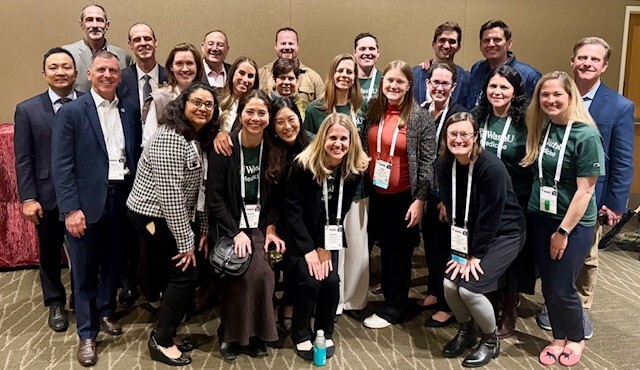
The fellowship is conducted under the auspices of the Division of Gynecologic Oncology. The fellowship program director is Carolyn McCourt, MD, Associate Professor of Obstetrics and Gynecology.
Why WashU Gynecologic Oncology for Fellowship
Training sites
More about our training sites »
Program Format and Objectives
Our three-year fellowship provides dedicated research immersion, comprehensive clinical training, and progressive surgical autonomy to prepare fellows for independent practice and academic leadership.
Research Training (Year 1)
- Fully protected research year tailored to individual career goals
- Pre-fellowship meetings with program leadership to define research focus
- Opportunities in clinical trials, translational science, and outcomes research
- Support for manuscript editing, scientific writing, and grant development
- Required graduate-level coursework (fully funded)
- Strong encouragement and funding to present nationally and publish in peer-reviewed journals
- Supplementary coursework and statistical support available
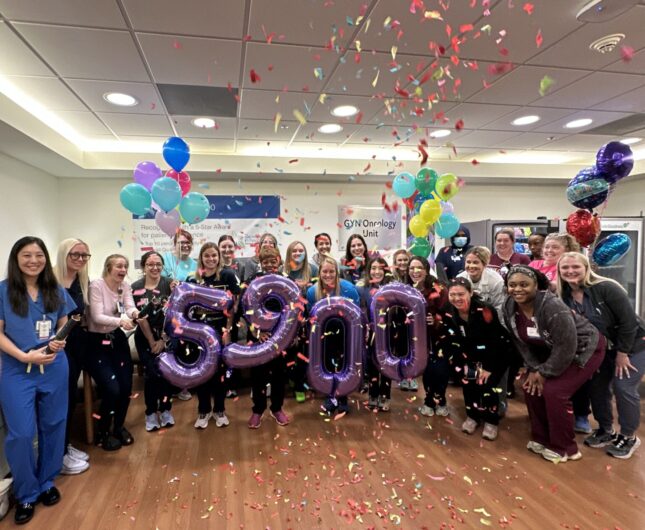
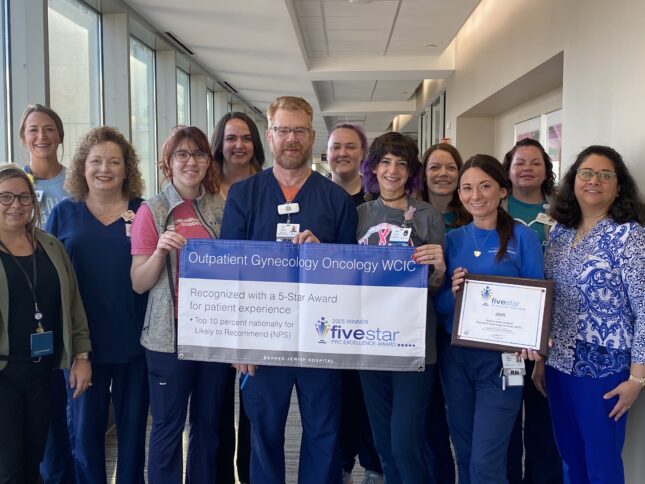
Didactics & Teaching (All 3 Years)
- Weekly protected didactic time (Wednesday mornings)
- Three-year rotating curriculum aligned with ACGME and ABOG objectives
- Monthly fellow-led Journal Club with faculty mentorship
- Weekly multidisciplinary Tumor Board with case-based, oral-exam style discussion
- Professional Development Series (leadership, negotiation, career strategy)
- Daily research programming and educational events across campus
Clinical Training (Years 2 & 3)
- Training under over 10 gynecologic oncology faculty
- High-volume tertiary referral center for the region
- Team-based model with fellows, advanced care practitioners, and residents across all levels
- Inpatient and ambulatory oncology care experience
- Chemotherapy administration and toxicity management
- Graduated autonomy in radical pelvic and complex oncologic surgery
- Fellow’s Clinic under faculty supervision
- Over 450 new gynecologic cancer patients annually
Clinical Competency Goals
- Independently perform radical pelvic surgery
- Manage complex intestinal, urologic, and vascular complications
- Direct care of critically ill oncology patients
- Participate in multidisciplinary radiotherapy planning
- Select and administer systemic therapy and manage toxicities
Clinical Research Integration
- Participation in investigator-initiated and industry-sponsored trials
- Active involvement in national cooperative group studies
- Collaboration with Developmental Therapeutics and Phase I programs
- Full support from research staff and the Division of Clinical Research
Off-Service Rotations
- Surgical ICU (2 weeks) – critical care training in ventilatory and hemodynamic management
- Radiation Oncology (2 weeks each in Years 2 & 3) – radiation physics and biology education
- Palliative Care (2 weeks) – interdisciplinary symptom management training
- Colorectal Surgery (2 weeks, final year) – advanced bowel surgery experience
Why Train Here?
- Training within a nationally recognized cancer center
- Active participation in national cooperative group trials
- Dedicated research year with formal coursework
- Individualized mentorship and structured career development
- High-volume, high-complexity surgical training
- Multidisciplinary collaboration across specialties
- Comprehensive preparation for ABOG certification
- Supportive, collaborative culture with a strong alumni network
Living in St. Louis

Proudly located in the heart of the U.S., here you’ll find charming neighborhoods, vibrant music, art, and culinary scenes, and plenty of fun for nature-lovers and urbanites alike — all packed into an affordable, welcoming city. We’re known as the Gateway to the West, but we like to say we’re the gateway to the best — from our medical community to our Midwest hospitality, St. Louis is sure to surprise you.
Our Current Fellows
Mark Valentine, MD, PhD
Clinical Fellow, Gynecologic Oncology
Began Fellowship 8.1.2023
Graduates 7.31.2026
Whitney Grither, MD, PhD
Clinical Fellow, Gynecologic Oncology
Began Fellowship 8.1.2023
Graduates 7.31.2026
Joshua Brill, MD
Clinical Fellow, Gynecologic Oncology
Began Fellowship 8.1.2024
Graduates 7.31.2027
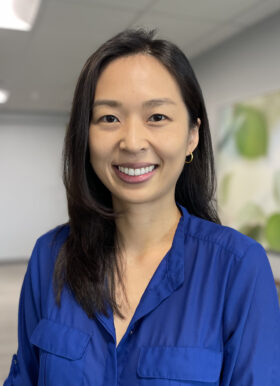
Deanna Wong, MD, MPH
Clinical Fellow, Gynecologic Oncology
Began Fellowship 8.1.2024
Graduates 7.31.2027


Learn more about the Division of Gynecologic Oncology »
How to apply
All completed applications will be considered for an interview. The program coordinator will send interview invitations directly to candidates via ERAS. If you have any questions about the application process, please contact the program coordinator.
We are no longer able to support applicants who require sponsorship for a new H-1B visa. Our programs continue to support applicants on J1 visas as well as applicants already located in the US requiring an extension/amendment to a current H-1B visa.
Apply to the program through ERAS®.
Go to ERAS »
Requirements for ERAS application consideration:
- MyERAS Application
- Curriculum Vitae
- Medical School Transcript
- Medical Student Performance Evaluation (MSPE)
- Personal Statement
- Photo
- USMLE Transcript
- Three Letters of Recommendation
- One Letter of Recommendation from the Residency Director or Department Chair (SLOE preferred but optional)
- Two Letters of Recommendation
- One preferably from a Gynecologic Oncologist (SLOE preferred but optional)
- One Additional Letter of Recommendation
Program contacts
Fellowship Program Director:
Carolyn McCourt, MD
Associate Fellowship Program Directors:
Lindsay Kuroki, MD, MSCI
Brooke Sanders, MD
Fellowship Program Coordinator:
Kelly Stockstill
Key Dates
Go to the Society of Gynecologic Oncology for Key Dates »
3-Year Fellowship Appointment: 2027-2030
Positions Available: 2
Application Deadline
April 6, 2026
In-Person Fellowship Interview Dates
August 14 & 15, 2026